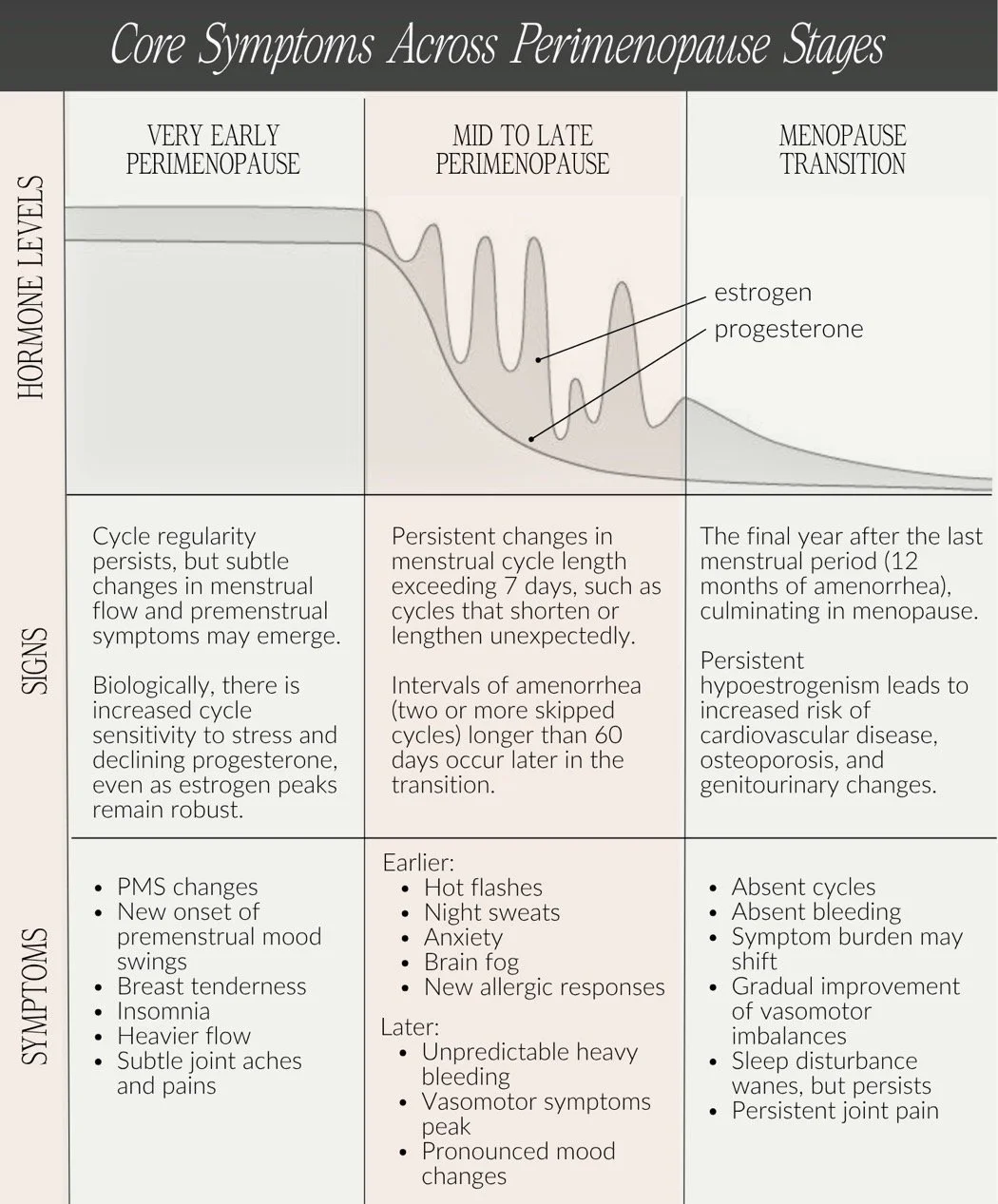
PeriMenopause- Understanding what is happening.
It feels incredibly unfair to lose things at your fingertips.
To lose sleep, concentration and focus. To fly off the handle over seemingly small things, all because of a few hormonal disruptions. And yet the truth is, we would be dead without these hormones. They exist to keep us in balance.
So when the wheels started to fall off for some of my clients, and admittedly for me too, I looked at what I knew and where the gaps were. Then I started filling them in.
Here's what I know.
Progesterone and oestrogen both play a role in regulating your sleep-wake cycle. As both become disrupted during perimenopause, the results are exactly as I said. Unfair.
Sleep disturbance reduces the quality and quantity of your overall sleep. REM sleep is where you process the day's events and dream, so when that falls away, the consequences show up as emotional and mental disturbance, trouble regulating mood, and poor concentration.
Oestrogen also plays a part in regulating your core body temperature, which is why hot flushes happen. As oestrogen drops off, your body's other systems take over the load of temperature regulation, and it shows.
These hormone irregularities also have a knock-on effect on blood sugar stability. Women become less sensitive to insulin and less efficient at processing carbohydrates, which means fat is stored more easily and clears more stubbornly, particularly around the abdomen.
None of this is in your head. This is our bodies doing exactly what it is designed to do under hormonal load, or lack.
A 2023 meta-analysis of women navigating this transition found that nonpharmacological approaches, things like consistent routines, movement and stress-reducing practices, made a measurable difference to sleep quality and insomnia severity, without the side effects that come with medication. That matches what I see in my own clients, and in myself.
So what does this all mean?
Managing stress is pivotal in helping to stabilise blood sugar crashes.
Eating whole foods, with more protein and fibre, helps keep blood sugar levels steadier through the day.
A consistent bedtime routine, without screens where possible, protects the sleep you do get.
Restorative movement matters more than intense movement. I do mine early in the day and avoid high impact activity later on, because I've seen firsthand what that does to my own sleep.
I have always been a big believer in listening to your body.
This feels like a good place to start.
References
Ha B, Kim J, So WY, Kim S. Effects of Nonpharmacological Interventions on Sleep Quality and Insomnia in Perimenopausal and Postmenopausal Women: A Meta-Analysis. Healthcare. 2023.
Woods NF, Mitchell ES. Symptoms during the perimenopause: Prevalence, severity, trajectory, and significance in women's lives. Am J Med. 2005;118:14–24.
#Perimenopause #NurseHealthCoach #WomensHealth #HormoneHealth #BloodSugarBalance #SleepHealth #NervousSystemHealth #EVOLVE #NZHealthCoach #EvidenceInformedCoaching