High-Functioning Stress in Healthcare Professionals: The Hidden Cost of Carrying It All
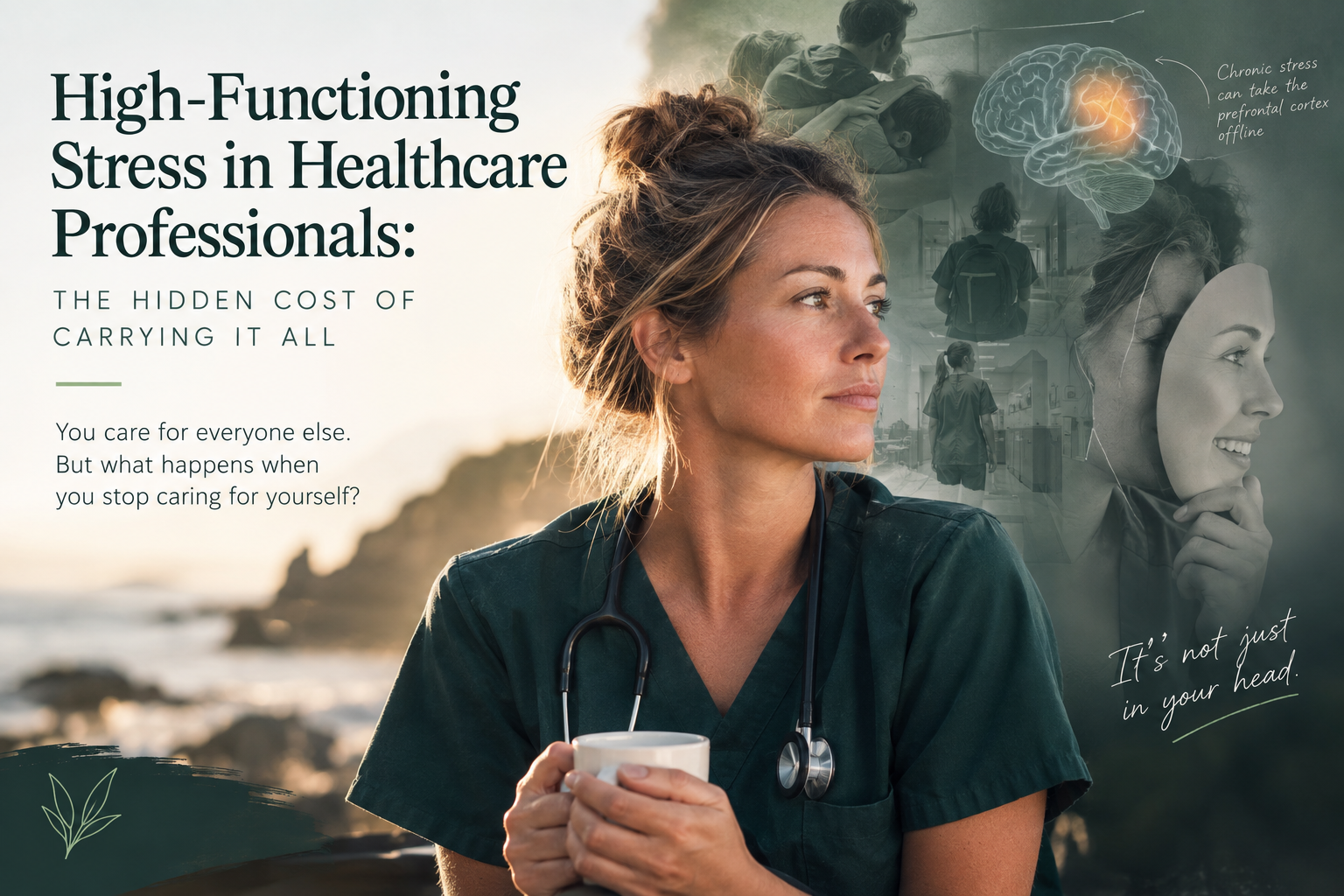
We all know her. She might even be you.
She is a healthcare professional who carries a dying father, a neurodivergent family, full-time work, profound grief, and all the other demands life throws at.
She holds her family together, ensures nourishing meals are on the table, and gets the kids to their extracurriculars. She is functioning—but she is far from being the vibrant woman she envisages.
She survives by wearing a mask. But the physical toll of never letting that mask drop is agonizing. She doesn’t allow herself the space to feel the exhaustion, and the resulting pain is a seen daily and felt closely.
As healthcare professionals, we are incredibly skilled at caring for others. We look at a chart, read the vitals, and instantly know the care plan. Yet, when it comes to ourselves, there is no chart. We believe our needs must always come last, and we often pay the price.
The Science of Chronic Overwhelm and Masking
When we consistently choose others over our own health, the body keeps score. Masking—the continuous effort to suppress genuine emotions to appear "fine"—requires immense neurological energy, and can lead to profound cognitive fatigue and your ability to make complex and rationale decisions is depleted. Small problems feel like mountains.
This chronic stress elevates cortisol, spiking blood sugar levels and increasing cardiovascular risk. For women navigating life transitions like perimenopause and menopause, this hormonal chaos amplifies irritability, mood swings, and vulnerability to disease.
Some ways that patients and clients have demonstrated their stress being exhibited:
The Body's Stress Response
Typically-
Our bodies manages threat through four survival modes:
Fight: High energy directed outward, causing irritability and a rapid heart rate.
Flight: High energy directed toward escape, causing chronic anxiety and restless overworking.
Freeze: Low energy or "shutdown" when a threat feels inescapable, causing brain fog, dissociation, and fatigue.
Fawn: Relational survival, causing people-pleasing and abandoning boundaries to keep the peace.
Common Physical Signs of Stress
When survival states become chronic, the constant flood of stress hormones causes distinct physical symptoms:
Chest Tightness: Constricted airways and an elevated heart rate cause shallow, rapid breathing and a heavy sensation in the chest.
Muscular Armoring: The body reflexively braces for impact, leading to chronic tension in the jaw, neck, and shoulders.
"Tired and Wired" Sleep: Elevated nighttime cortisol disrupts your sleep cycle. You experience daytime exhaustion paired with nighttime racing thoughts and insomnia.
Digestive Distress: Stress diverts blood flow away from your gastrointestinal tract, causing nausea, bloating, cramping, or irregular bowel habits.
Sensory Overload: A hyper-vigilant nervous system cannot filter external inputs, making normal noise, light, or crowds feel completely overwhelming.
Emotional Numbness: Prolonged stress exhausts your brain's neurochemicals, leading to emotional flatlining, a lack of joy, and a feeling of disconnection.
Building Your Own Care Plan
I am not offering a magic cure,
The very first step is simply to notice. Notice when your chest tightens. Notice when you are trapped in stress response. By observing without judgment, you create a micro-pause. In that second, you can choose to slow down. You can decide whether a homework battle is worth fighting, or if you need to cancel on a friend because you simply lack the capacity today. That is the power of making choices aligned with your actual values.
Beneath the roles of mother, caregiver, and professional, who is she? She is a lover of adventure. She loves space, quiet, deep connections with friends, and good coffee. Sometimes she knows exactly what she wants, even if she has no idea how to get there.
Dropping the mask is not a personal failure; it is proof of your humanity. You need the courage to choose yourself, so you can actually be the person you want to be.
If this resonates with you, and you need another set of eyes on your own invisible chart, I would love to hear from you.